AI Models vs Real Models: Which is Best for E-Commerce?
·8 min read
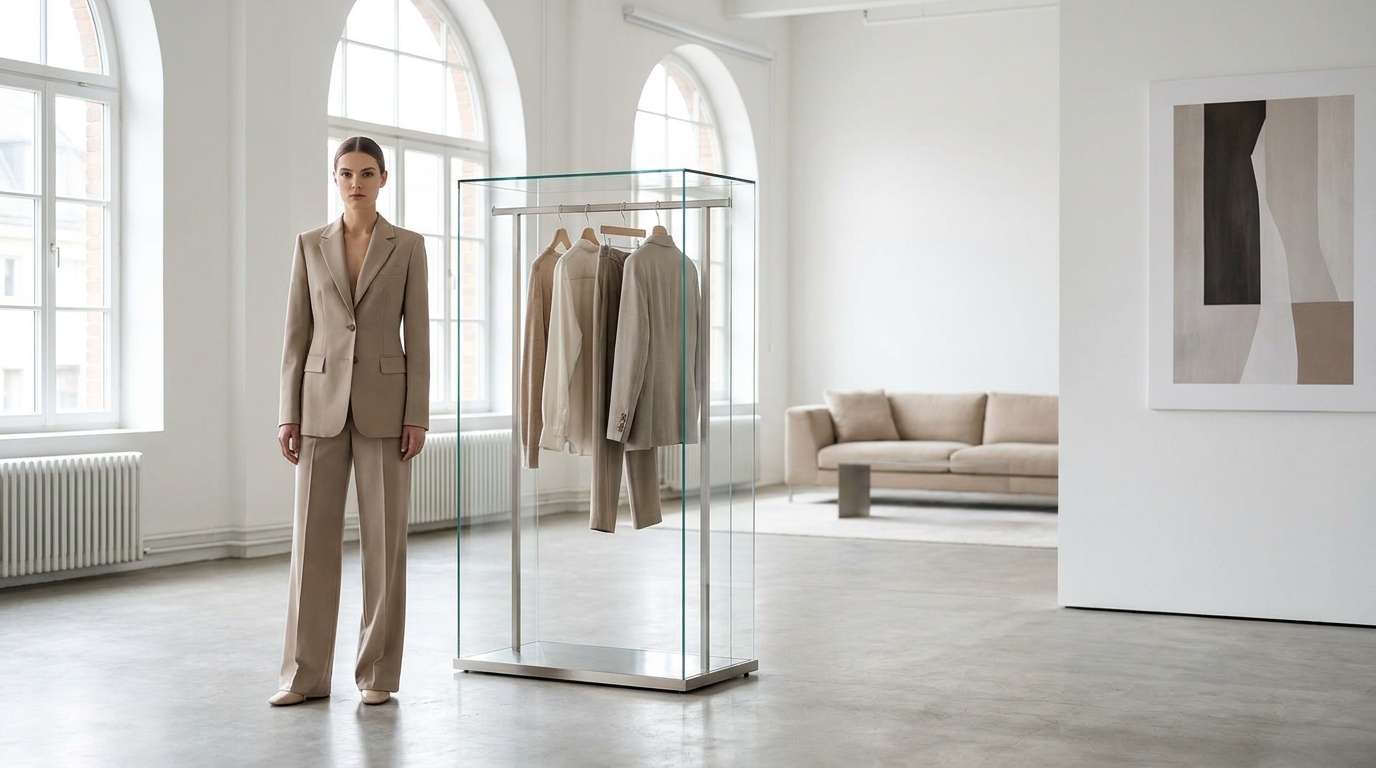
E-commerce fashion is highly visual. The way you present a garment often determines whether a customer clicks to add an item to their cart or bounces to a competing store. For years, the only way to get high-quality, on-model photography was to organize traditional photoshoots. Today, artificial intelligence has introduced an entirely new method. The conversation around "ai models vs real models" is happening in every fashion brand's marketing department.
As an e-commerce manager or brand owner, you have to balance visual quality with budgets, timelines, and logistical headaches. Do you stick with the tried-and-true method of booking a studio, or do you transition your catalog to AI-generated imagery?
The truth is, both approaches have distinct advantages. Making the right choice depends on your specific campaign goals, your budget, and how quickly you need to get products online. In this guide, we will break down the logistics, costs, and practical use cases for both traditional and AI-generated fashion photography, helping you build a visual strategy that actually works for your brand.
The Traditional Approach: Working with Real Models
For decades, traditional photography has been the gold standard for fashion e-commerce. Organizing a physical shoot involves a team of professionals and a significant amount of planning.
The Advantages of Real Shoots
The primary benefit of a traditional photoshoot is the ability to capture complex, spontaneous physical interactions. Real models can interact with their environment in unpredictable ways. If you need a model to pull on the fabric of a jacket, adjust a highly complex layered outfit, or interact physically with another model, a traditional shoot captures these nuances perfectly.
Additionally, traditional shoots are currently the best option for high-end video production. If your brand relies heavily on cinematic brand videos, runway movement, or behind-the-scenes documentary-style footage for your marketing channels, physical models and a professional video crew are essential.
The Drawbacks and Logistics
The main challenges of traditional photography revolve around time, logistics, and cost. A standard photoshoot requires extensive pre-production. You must scout locations, rent studio space, hire a photographer, book models through an agency, and arrange for hair and makeup artists. You also need to manage the logistics of getting all the physical garment samples to the location on time.
On the day of the shoot, you are bound by strict schedules. If the weather is poor during an outdoor commercial shoot, your entire production might be delayed, costing you money. After the shoot, you must wait for the photographer to cull the images, perform high-end retouching, and deliver the final files. This entire process can take weeks. Furthermore, if a garment is styled incorrectly or a shot is missed, organizing a re-shoot is often prohibitively expensive.
The New Wave: Generating AI Fashion Models
Artificial intelligence has fundamentally changed how brands approach product photography. Instead of organizing a physical shoot, brands can now generate photorealistic on-model imagery using software.
The Advantages of AI Generation
The most significant benefits of AI models are speed, flexibility, and cost-efficiency. You do not need a physical studio, a photographer, or a modeling agency. The process is entirely digital. You can take a basic photo of a garment—such as a flat lay, a ghost mannequin shot, a photo of the item on a hanger, or even an existing product page link—and transform it into a professional on-model photo.
Diversity and consistency are also major advantages. You can access a curated roster of AI models across various ages, genders, and ethnicities. If you want to maintain a consistent brand identity, you can reuse the exact same AI model across multiple seasonal campaigns, ensuring your product pages look uniform. You also have complete control over the environment. You can choose different backgrounds, locations, and poses—such as standing, sitting, or walking—and generate images in both 3:4 portrait formats for product pages and 16:9 landscape formats for banners.
If you are ready to streamline your workflow, you can try GetModels.AI to see how quickly a simple flat lay can become a high-quality editorial shot. The platform typically generates these images in roughly 30 seconds per image, providing 2K resolution downloads with no watermarks, fully cleared for commercial use. Keep in mind that these models are entirely AI-generated, not real people.
The Limitations of AI
While AI is incredibly powerful for still imagery, it does have current limitations. Most notably, platforms like GetModels.AI do not yet offer video generation. If your campaign requires fluid, high-resolution video of a model walking down a runway, AI cannot currently replace a traditional video crew.
Furthermore, workflow integrations are still developing. Currently, users must download their generated images and manually upload them to their e-commerce platforms, as direct plugins for platforms like Shopify are not yet available.
Side-by-Side Comparison: Logistics and Costs
To truly understand the differences, it helps to look at the logistical requirements side-by-side.
| Feature | Real Models & Traditional Shoots | AI-Generated Models |
|---|---|---|
| Setup Time | Weeks (casting, booking, scouting) | Minutes (uploading a base photo) |
| Location | Physical studios or outdoor sets | Digital selection (Studio, Editorial, etc.) |
| Weather Dependency | High (for outdoor commercial shoots) | None |
| Re-shoots | Expensive and time-consuming | Fast and virtually cost-free |
| Video Capability | Excellent | Not yet available |
When it comes to costs, traditional shoots vary wildly depending on your city, the experience level of the photographer, and the agency rates for the models. However, when you factor in day rates, catering, equipment rentals, and retouching fees, the costs add up quickly and can fluctuate per project.
AI photography operates on a much more predictable model. Because there are no agency fees or usage rights to negotiate, you know exactly what your content will cost month to month, making budget forecasting much easier for e-commerce managers.
Where Real Models Still Win
Despite the rapid advancement of AI, there are specific scenarios where traditional photography remains the best choice for fashion brands.
Brand Narrative and Hero Videos
If you are launching a massive, multi-channel brand campaign that relies on storytelling, real models are indispensable. Hero videos for your website's homepage, television commercials, and documentary-style behind-the-scenes content require the human element. The subtle micro-expressions and fluid movements captured on film cannot be fully replicated by current AI technology.
Complex Tactile Interactions
Sometimes, the selling point of a garment is how it moves or stretches. If you need a model to actively pull on the waistband of a pair of athletic shorts to demonstrate elasticity, or twirl to show the heavy drape of a ballgown, a physical shoot is necessary. Real models can take art direction on the fly to manipulate the fabric in highly specific, tactile ways.
Where AI Models Win
For the vast majority of day-to-day e-commerce operations, AI models offer distinct advantages that traditional shoots simply cannot match.
Rapid Catalog Expansion
If you run a fast-fashion brand or frequently release new capsule collections, speed to market is critical. Waiting weeks for a photoshoot means missing out on potential sales. With AI, you can take a quick ghost mannequin photo of a new t-shirt in your warehouse, process it, and have an on-model photo live on your website the very same day.
AI platforms are well-equipped to handle standard catalog items. You can easily generate front and optional back photos for:
- T-shirts and shirts
- Sweatshirts and jackets
- Dresses and skirts
- Pants and shorts
Scaling Social Media Content
Social media requires a relentless stream of fresh content. Audiences engage best with authentic, varied imagery rather than sterile studio shots. AI tools allow you to generate images in specific styles, including Studio, Editorial, Commercial (on location), and Social media.
The Social media style is particularly useful for generating authentic phone-style posts with vibes like Polaroid, analog film, or golden hour lighting. To make scaling even easier, GetModels.AI provides a ready-to-post caption for each social media image in your chosen language, drastically reducing the workload for your marketing team.
Predictable and Scalable Costs
Budget control is where AI truly shines. Instead of dealing with fluctuating day rates and unexpected overtime fees, AI operates on simple subscription models. For example, looking at the pricing for GetModels.AI, the Pro plan is €25 per month and includes 750 credits, while the Max plan is €100 per month for 4000 credits.
Since each image uses exactly 10 credits, you can calculate your exact cost per image. If you need more volume for a large seasonal upload, extra credits can be added anytime, and you can cancel anytime. This financial predictability is invaluable when scaling a brand.
Building a Hybrid Photography Strategy
The most successful e-commerce brands are not choosing one method over the other; they are building a hybrid strategy that leverages the strengths of both.
Allocate Budget Where It Matters
You can reserve your traditional photography budget for your flagship seasonal campaigns. Hire real models and a video crew twice a year to create stunning hero videos, lookbooks, and high-level brand narrative content. This satisfies the need for rich, interactive media and storytelling.
Use AI for Volume and Testing
For everything else, use AI. When you release a new colorway of an existing sweater, there is no need to organize a new shoot. Simply use a flat lay and generate the new on-model images. Use AI to populate your standard product pages and to fuel your daily Instagram and TikTok feeds.
You can also use AI for rapid testing. Before committing to a large manufacturing run, you can generate on-model images of a prototype garment, post them online, and gauge customer interest. This approach ensures your brand maintains a premium feel while dramatically reducing your overall content production costs.
Conclusion
The debate between AI models and real models does not have to be a zero-sum game. Traditional photoshoots will always have a place in high-end brand storytelling, complex video production, and capturing intricate tactile interactions. However, for e-commerce managers looking to scale their product catalogs rapidly, maintain visual consistency, and control costs, AI generation is an incredibly powerful tool.
By understanding the unique strengths of both approaches, you can build a highly efficient visual content strategy. Reserve your physical shoots for your most important narrative campaigns, and leverage the speed and flexibility of AI to keep your product pages full and your social media channels engaging.
Frequently asked questions
Can AI models completely replace real models for my clothing brand?
Not entirely. While AI models are excellent for standard catalog images and scaling social media posts, real models are still necessary for high-end brand narrative videos, runway shows, and capturing complex tactile interactions with garments.
How much does it cost to use AI models vs real models?
Traditional photoshoots can cost thousands of dollars when factoring in day rates, studios, and retouching. In contrast, AI generation operates on predictable subscriptions; for example, generating an image might only use 10 credits on a monthly plan, keeping costs strictly controlled.
Are AI-generated fashion images legal for commercial use?
Yes, images generated on professional platforms are typically cleared for commercial use without watermarks. However, this is a general overview, so always check the specific terms of service of your chosen platform and consult a legal professional if you have specific licensing concerns.
Do I need a professional photographer to use AI model generators?
No. You can use simple photos like a flat lay, a ghost mannequin shot, a picture of the item on a hanger, or even an existing product page link to generate professional on-model photos.
Try GetModels.AI
Turn your garment photos into on-model images in minutes. No studio, models or photographer needed.